The International Baccalaureate (IB) curriculum is an international education framework for students aged 3 to 19. It includes four programmes: the Primary Years Programme, Middle Years Programme, Diploma Programme and Career-related Programme. What students study and how their work is assessed depend on which programme they take.
If you’re comparing schools, start by asking which IB programme your child would actually join. Two schools may both offer an IB education, yet serve different age groups or offer different subjects. That matters especially in the final years of school, when subject choices can affect which university courses a student can apply for.
What are the four IB programmes?
The four IB programmes cover different stages of education. PYP and MYP cover the earlier years, while DP and CP are two routes for students aged 16 to 19. Use the age ranges below as a starting point, then ask the school how its year groups and entry points work.
IB programme | Official age range | What students do | What assessment looks like |
Primary Years Programme (PYP) | 3–12 | Explore questions that connect learning across subjects. | Teachers use students’ work, discussions and reflections to understand their progress. The PYP Exhibition brings together learning through an inquiry project. |
Middle Years Programme (MYP) | 11–16 | Study subjects such as languages, sciences, mathematics, design and the arts, and connect ideas across subjects. | Teachers assess work against programme criteria. In the final year, students complete a personal project. Other external eAssessment components are optional. |
Diploma Programme (DP) | 16–19 | Study six subjects alongside Theory of Knowledge, the Extended Essay, and Creativity, Activity, Service. | Assessment combines externally assessed work, including exams in many subjects, with internally assessed components. |
Career-related Programme (CP) | 16–19 | Take at least two Diploma Programme courses alongside career-related studies and the CP core. | Assessment depends on the component. The school can explain how the DP courses, core and career-related qualification are assessed. |
The age ranges overlap, so ask the school where your child would enter. If you’re looking ahead to the final years, check which route the campus offers and which subjects or career-related pathways are available.
What does learning in an IB classroom look like?
IB programmes encourage students to ask questions, use evidence and explain their thinking. The teacher might introduce a topic, teach the skills students need and give feedback while they work through a problem.
Imagine a class investigating how its school could use less water. The teacher shows students how to collect reliable measurements. One group records how much water is used in a particular area of the school. Another compares possible changes, such as repairing leaks or changing how the garden is watered. The students then explain which option they recommend and where their evidence is limited.
That’s what inquiry-based learning can look like in practice. The students still need to learn the underlying maths and science. The project gives them a reason to apply both and explain how they reached a conclusion.
What subjects do students take in the IB Diploma Programme?
Students pursuing the full IB Diploma Programme, often called the IBDP, take six subjects and complete the DP core. Subjects come from areas that include language and literature, language acquisition, individuals and societies, sciences, mathematics and the arts. The IB allows some substitutions, and the combinations a student can take also depend on the school’s offerings and timetable.
How do Higher Level and Standard Level work?
Diploma students take at least three and no more than four subjects at Higher Level (HL), with the remaining subjects at Standard Level (SL). HL courses give students more time to study a subject in depth. The difference can also affect university applications when a degree asks for a specific subject at HL.
What is the DP core?
Component | What students do |
Theory of Knowledge (TOK) | Examine how people build and test knowledge, including what counts as good evidence in different fields. |
Extended Essay (EE) | Develop a focused research question and investigate it through an independent essay. |
Creativity, Activity, Service (CAS) | Take part in experiences involving creativity, physical activity and service, and reflect on what they learn. |
The core runs alongside the six subjects. Ask the school when major deadlines fall and how teachers help students plan for them. The SEV7N IB Diploma Programme guide gives students a place to explore the programme in more detail.
A worked example of choosing IB subjects
Suppose Maya is considering mechanical engineering and is about to select her Diploma subjects. Here’s how she could work through the decision:
Open the degree pages for a few universities she might apply to. She checks whether each asks for a particular maths course, Physics, a Higher Level subject or a minimum grade.
Write the requirements side by side. If a course names a specific maths pathway, she checks the full course name. She can use this guide to the difference between IB Math AA and AI to understand the options before confirming which one the university accepts.
Ask the school whether the subjects can be taken together. A school may list the courses she wants, so she asks whether she can take them at the required levels in the same timetable.
Review the full combination. She considers the remaining subjects, her interests and the workload with a school counsellor before submitting her choices.
This is an illustrative example. Maya’s final choices depend on the requirements published for her intended degrees and entry year.
How are IB students assessed?
IB assessment varies by programme and subject. In the MYP, teachers use subject criteria to assess student work. The final-year personal project is teacher-marked and externally moderated, while other external eAssessment components are optional. In the Diploma Programme, the mix can include written exams, coursework, practical work and oral assessments.
For example, a Diploma science student may carry out an investigation and also sit written exams. A language student may have an oral component. Ask for the assessment breakdown for each subject so you can see what the student will submit, what they will sit as an exam and when each component takes place.
How is the IB Diploma scored?
Each of the six Diploma subjects receives a grade from 1 to 7. Theory of Knowledge and the Extended Essay can add up to three points combined, bringing the maximum to 45 points. Students must earn at least 24 points and meet the IB’s other passing conditions, including completing CAS, to receive the Diploma.
For example, subject grades of 6, 6, 5, 5, 5 and 4 add up to 31 points. With two points from TOK and the Extended Essay, the total would be 33 out of 45. The IB also checks the other Diploma award conditions.
How does the IB curriculum compare with other school curricula?
Compare the options available to your child at the same stage of school. For a student entering the final two years, the useful comparison is between the IB Diploma and the route they could actually take at their other school.
What to compare | What to ask both schools |
Subject choice | Which subjects can my child take together, and at what level? |
Assessment | How much of the result comes from exams, coursework, practicals or other assignments? |
Workload across the term | When do major assignments, projects and exams usually fall? |
University preparation | Do the subjects offered meet the entry requirements for the degrees my child is considering? |
Support | Who helps students choose subjects, adjust to the curriculum and manage deadlines? |
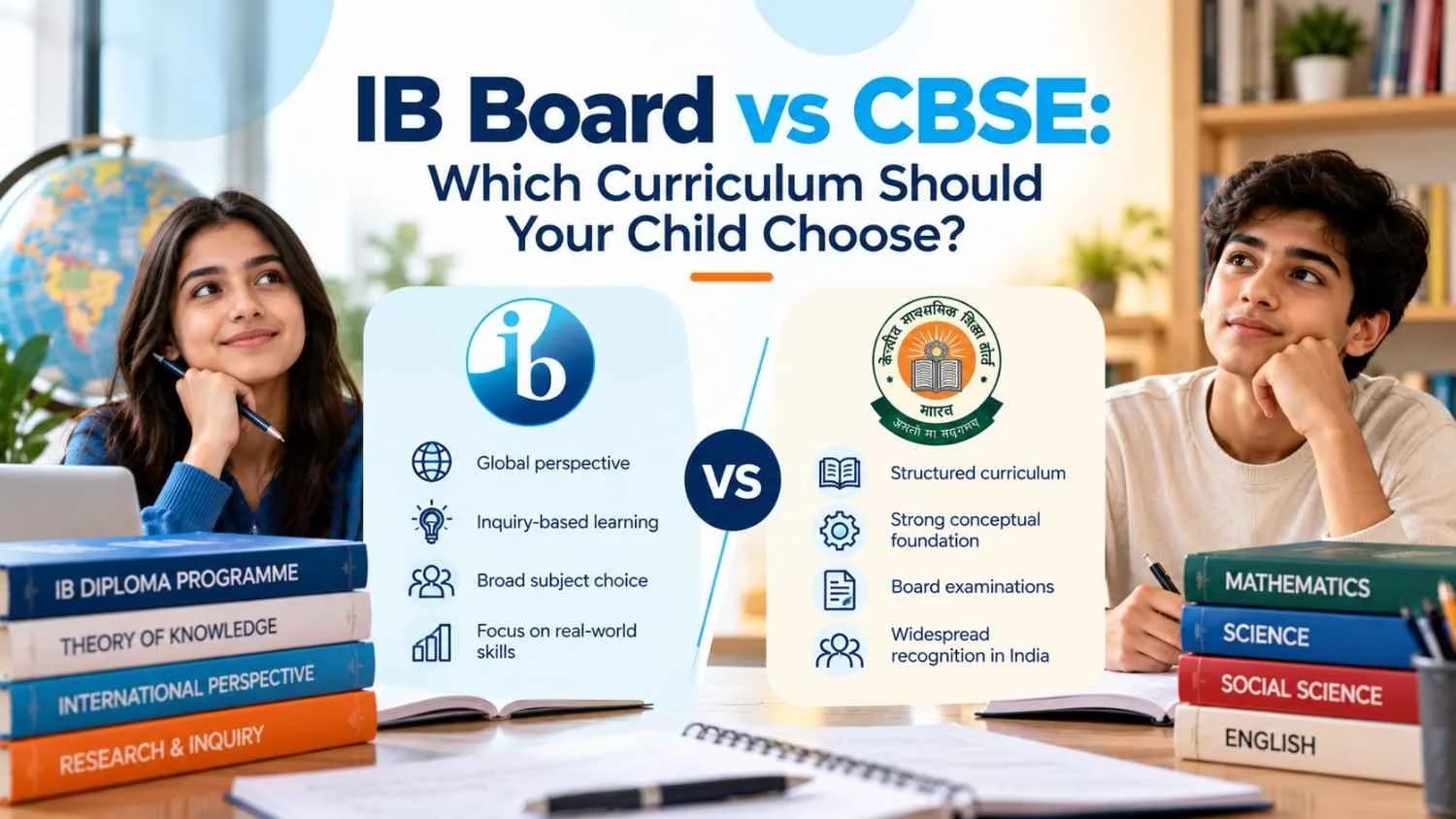
The comparison depends on where you live and what each school offers. Families weighing options can read SEV7N’s guides on how IB and AP differ, IB and UK curriculum options, or how IB compares with CBSE.
Can students switch to the IB curriculum?
Students can apply to join an IB school from another curriculum. Start with the receiving school’s entry requirements and subject options. The school can tell you where the student would enter, what prior learning it expects and what support is available.
Before applying, confirm the entry point. Ask which year group the student would join, whether the school requires a placement test, and which reports or coursework it wants to see.
Before selecting subjects, check for gaps. Ask about language placement, maths prerequisites and the background expected for any Higher Level subjects the student is considering. Check the timetable before committing to a combination.
Before the first term, practise the work the student will do. Ask for a sample assignment or reading list. A student who is used to short exam answers could practise writing one paragraph that makes a claim, uses evidence and explains how the evidence supports it.
During the first month, put deadlines in one calendar and break longer assignments into smaller tasks, such as choosing a question, gathering sources and writing a first draft. If a specific subject gap remains, online IB tuition is one option for focused support.
How do universities recognise IB qualifications?
Check recognition at the university level, then check eligibility for the specific degree. A university’s IB policy tells you how it considers the qualification. The degree page tells you what a student needs to apply, which may include particular subjects, Higher Level grades or an overall score. Credit or advanced standing is a separate check where applicable.
Before confirming Diploma subjects:
Look up the country or institution in the IB university recognition directory.
Open the university’s admissions page for the exact degree and intended entry year.
Record the overall score, subject names, levels and individual grades it asks for.
Check separate requirements for entrance tests, interviews or language proficiency if the degree lists them.
Ask the admissions office about any requirement that could affect the student’s subject choices.
Do this early enough to discuss the findings with the school. It is easier to change a proposed subject combination before the timetable is set.
What should parents check before choosing an IB school?
Use the official IB World School directory to check the specific campus and programme. Then take these questions to an open day or admissions call.
Which IB programmes is this campus authorised to offer?
Which subjects and levels will run for my child’s year group? Can the preferred subjects be taken together?
What does the first term look like? Ask to see a sample assessment calendar.
How do you help students arriving from another curriculum? Ask about language placement, writing support and help with study planning.
Who advises students on university entry and subject choices? Find out when that guidance starts.
What is the full cost? Ask for a written breakdown of tuition and any separate charges for exams, materials, transport or activities.
If you can ask only one question at an open day, try this: “Can you walk me through what my child would study and submit in their first term here?” The answer will help you compare schools in terms of what your child would experience week to week.
Frequently asked questions about the IB curriculum
Is the IB curriculum the same in every country?
The IB sets the programme framework. Schools apply it in their own contexts, so the languages available, subject combinations, school calendars and local requirements can vary. Compare the offerings at the specific campuses you’re considering.
Do all IB schools offer all four programmes?
An IB World School may offer one or more programmes. Use the IB directory to check which programmes the campus is authorised to offer, then confirm which are available for your child’s intended entry year.
Can you join the IB Diploma Programme without completing the MYP?
Yes. Students can apply to join the Diploma Programme from another curriculum. Ask the receiving school about its admissions process, required prior study and any placement checks for the subjects you want to take.
Can you take individual IB subjects without completing the full Diploma?
Some schools offer individual Diploma Programme courses. If you’re considering this route, ask the school what results you would receive and check how your intended universities treat individual course results compared with the full Diploma.
What is the difference between the IB Diploma and the Career-related Programme?
The Diploma Programme combines six subjects with TOK, the Extended Essay and CAS. The Career-related Programme combines at least two Diploma Programme courses with career-related studies and its own core. Compare the pathways your school offers and how each fits your plans after graduation.
Do all IB programmes have final exams?
Assessment varies across the four programmes. For example, the MYP includes school-based assessment and optional external eAssessment components, while the Diploma Programme uses both external and internal assessment. Ask for the breakdown for the specific programme and subject.
Is IB hard for students switching from another curriculum?
The adjustment depends on the student’s previous school experience and the programme they enter. A student might be comfortable with the subject material and still need practice writing from evidence or planning several assignments at once. A sample task and a first-term calendar can help identify what to practise before classes begin.
Do universities require specific IB Higher Level subjects?
Some degree programmes specify subjects, levels and minimum grades. Check the admissions page for the exact course and entry year before choosing your subjects, then confirm that your school can offer the combination you need.